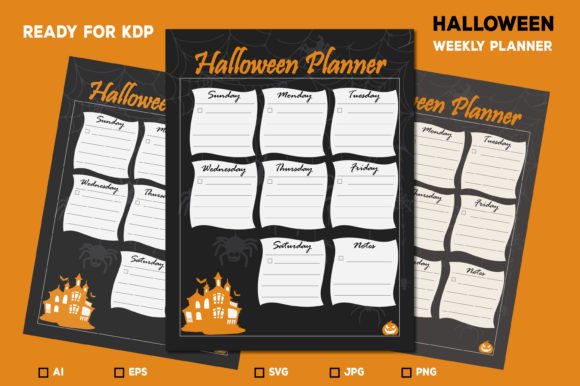
Halloween Weekly Schedule Graphics for KDP Interiors & Merch
As I start planning my seasonal digital shop updates, finding assets that can stretch across multiple product types is a top priority. When I first opened the Halloween Weekly Schedule, my immediate thought was its strong festive, playful personality. It doesn’t lean overly cute or spooky; it feels decorative and commercial-ready, which is ideal for targeting adults planning parties or families organizing their October activities. The niche appeal is clear: it's for anyone selling Halloween-themed organization, celebration, or decorative products.
First Impressions & Visual Personality
The design carries a festive, slightly rustic charm that would attract buyers looking for something more unique than generic clipart. This isn't a minimalist asset; it feels decorative and intentional, which helps products stand out in crowded marketplaces like Etsy or Creative Fabrica. Its mood is perfect for planners, but its visual style—with those Halloween-themed elements—makes it versatile for far more than just KDP interiors.
Real Product Applications: Testing Across Platforms
Before I list anything, I test a graphic design asset across a few key product formats to gauge its flexibility. With the Halloween Weekly Schedule, I immediately saw potential in several areas.
For Printable & Digital Download Products: It’s a natural fit for KDP interior pages, of course, but also for standalone printable wall art, planner sticker sheets, and invitation templates. The weekly layout structure provides a useful framework that customers can appreciate.
For Merchandise & Print-on-Demand: As a PNG with clean areas, it adapts well to t-shirt graphics, mug designs, and tote bag prints. I’d test it as a central decorative element on a tumbler wrap or as part of a larger sublimation design for a tea towel.
For Digital Design & Crafting: If converted or supplied as an SVG, it becomes valuable for Cricut projects like scrapbooking kits, cardstock decorations, or even vinyl stickers. It could anchor a digital paper pack or serve as a featured graphic in a Canva template for social media planners.
Supporting Professional Product Presentation
A major value of a cohesive asset like this is in product presentation. Using the Halloween Weekly Schedule across a collection creates brand consistency. For instance, using it in mockup previews for a Halloween planner, then as a thumbnail for a matching sticker set, and again in promotional visuals for a blog post about Halloween planning—this visual storytelling builds customer trust and perceived value.
It helps with thumbnail appeal on marketplace listings, especially when displayed against a clean background in a product mockup. Its decorative nature can increase click-through potential because it looks complete and thoughtfully designed, not like a hastily assembled template.
Where This Asset Works Best
I’ve found this type of design excels in specific applications:
- Large Product Previews: In full-page mockups for KDP books or large printable art.
- Themed Bundles: As a core element in a Halloween digital product bundle.
- Printable Products: Where the detail and theme can be appreciated at home-printing scale.
- Merchandise Graphics: On products like mugs or totes where the decorative layout fills the space nicely.
- Creative Marketplace Listings: As a key visual that communicates the product’s purpose immediately.
Cautious Use Cases & Seller Checks
Even with a versatile commercial design, there are points to verify before selling finished products.
Where you should use the Halloween Weekly Schedule carefully:
- Tiny Details: If used for small sticker details, some intricate elements might get lost.
- Low-Resolution Prints: Always confirm the file resolution is high enough for your intended physical product.
- Crowded Thumbnails: Avoid placing it on a busy background in a small listing image; it needs contrast to pop.
- Clean Cutting Lines: For SVG use in Cricut or Silhouette projects, inspect the cut paths to ensure they are closed and logical.
- Text-Heavy Templates: The design has a strong visual personality; pairing it with additional text requires careful font choice to avoid clutter.
Practical Steps Before You List
My process before publishing any product using a new asset involves a few key tests:
- Mockup Test: Place the Halloween Weekly Schedule on a real product mockup—a mug, a book cover, a t-shirt—to see how it occupies the space.
- Thumbnail Preview: Scale it down to a marketplace thumbnail size to ensure it remains legible and appealing.
- Background Check: View it on both white and dark backgrounds to test contrast and visibility.
- Print Color Test: If selling physical items, print a sample to verify colors render as expected.
- File Inspection: For PNGs, check the transparency. For SVGs, verify layer organization and cut quality.
- Font Pairing: Experiment pairing the design with a serif font for elegance, a sans serif for modernity, or a playful script font to enhance its festive mood.
- License Confirmation: Always double-check the commercial license terms before selling your final products.
- Customer File Organization: Plan how you’ll deliver the files—clearly labeled and in logical formats for your audience.
Building a Seasonal Collection Around It
The true potential of the Halloween Weekly Schedule is as a cornerstone for a seasonal collection. It can be the unifying graphic across a range of products: a KDP interior, a set of Canva social media templates, a sublimation design bundle, and a printable party planning kit. This approach not only speeds up your product creation but also presents a more professional, cohesive brand to customers.
For small business owners and creative entrepreneurs, an asset like this reduces the design workload while increasing the perceived value of your entire Halloween-themed shop section. It’s a practical investment for anyone serious about building a professional-looking digital product lineup for the season.
In the end, the Halloween Weekly Schedule proves most useful not as a single-use graphic, but as a versatile commercial design that can be adapted, tested, and deployed across multiple product types, from digital downloads to physical merchandise. That flexibility is what makes a graphic design asset truly valuable for online selling.